
-
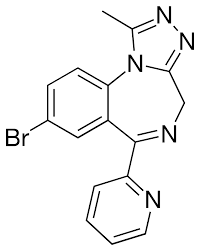
Buy Pyrazolam 3MG Pellets
Replaced by Pyrazolam 2.5MG Pellets >>
Synonym : 8-bromo-1-methyl-6-(pyridin-2-yl)-4H-[1,2,4]triazolo[4,3-a][1,4]benzodiazepine
CAS Number : 39243-02- 2
Formula : C16H12BrN5
Molar mass : 354.20
Purity : ≥ 99%Price range: $8.95 through $56.95 -
Buy Pyrazolam 2.5 MG Pellets online
Synonym : 8-bromo-1-methyl-6-(pyridin-2-yl)-4H-[1,2,4]triazolo[4,3-a][1,4]benzodiazepine
CAS Number: 39243-02- 2
Formula: C16H12BrN5
Molar mass: 354.20
Purity: ≥ 99%Price range: $12.56 through $197.96 -
Buy Norflurazepam online
Synonym: Norflurazepam
CAS Number: 2886-65-9
Formula: 7-chloro-5-(2-fluorophenyl)-1,3-dihydro-2H-1,4-benzodiazepin-2-one Mole
mass: 299.3 g/mol
Purity: >97%Price range: $12.56 through $197.96 -
Buy Flunitrazolam 0.25mg Pellets Online
Synonyms : 1-methyl-8-nitro-6-(2-fluorophenyl)-4H-[1,2,4]triazolo[4,3-a][1,4]benzodiazepine
CAS Number : 2243815-18-9
Formula : C17H12FN5O2
Molar mass : 337,307 g/mol
Purity : ≥98%Price range: $6.00 through $180.43 -
Buy Flunitrazolam 0.25mg Blotters Online
Synonym: 1-methyl-8-nitro-6-(2-fluorophenyl)-4H-[1,2,4]triazolo[4,3-a][1,4]benzodiazepine
CAS Number: 2243815-18-9
Formula : 1-methyl-8-nitro-6-(2-fluorophenyl)-4H-[1,2,4]triazolo[4,3-a][1,4]benzodiazepine Molecular
mass: 337,307 g/mol
Purity: ≥98 %Price range: $13.75 through $180.43 -

Buy Flubrotizolam 0.5 MG Pellets
Flubrotizolam pellets with 0.5 milligrams of active substance
Synonym: Flubrotizolam
CAS Number: 57801-95-3
Formula: 4-bromo-7-(2-fluorophenyl)-13-methyl-3-thia-1,8,11,12-tetrazatricyclo[8.3.0.0 2,6 ] trideca-2(6),4,7,10,12-pentaene
Molar mass: 377.24 g mol
Purity: >98%Price range: $16.95 through $299.95 -

Buy Flubrotizolam 0.5 MG Fanax Bars
Fanax bars are no longer supplied. A replacement is Flubrotizolam Pellets.
Synonym: 2-bromo-4-(2-fluorophenyl)-9-methyl-6H-thieno[3,2-f][1,2,4]triazolo[4,3-a][1,4]diazepine
CAS Number: 57801-95-3
Formula: C17H12BrFN4
Molar mass: 377.2 g/mol
Purity: ≥99%Price range: $16.00 through $472.39 -

Buy Flubromazepam Pure
Synonym: Flubromazepam
CAS Number: 2647-50-9
Formula: 7-bromo-5-(2-fluorophenyl)-1,3-dihydro-2H-1,4-benzodiazepin-2-one Mole
mass: 333.2 g/mol
Purity: >97%Price range: $90.00 through $360.00 -

Buy Flubromazepam 10 MG Pellets
Synonym: Flubromazepam
CAS Number: 2647-50-9
Formula: 7-bromo- 5- (2- fluorophenyl)- 1,3- dihydro- 2H- 1,4- benzodiazepin- 2- one
Molar mass: 333.2 g/mol
Purity: >98%Price range: $13.95 through $219.95 -

Buy DeschloroEtizolam 5 MG Pellets
Synonym: 2-ethyl-9-methyl-4-phenyl-6H-thieno[3,2-f][1,2,4]triazolo[4,3-a][1,4]diazepine CAS Number: 40054- 73-7
Formula: C17H16N4S
Molar mass: 308.4
Purity: ≥ 99%Price range: $11.95 through $199.95 -

Buy Deschloroetizolam 2mg Blotters
Synonym: 2-ethyl-9-methyl-4-phenyl-6H-thieno[3,2-f][1,2,4]triazolo[4,3-a][1,4]diazepine CAS Number: 40054- 73-7
Formula: C17H16N4S
Molar mass: 308.4
Purity: ≥ 99%Price range: $150.00 through $1,600.00 -
Buy Clonazolam Pellets 1mg online
Formal Name – 6-(2-chlorophenyl)-1-methyl-8-nitro- 4H-[1,2,4]triazolo[4,3-a][1,4]benzodiazepine CAS Number – 33887-02-4Molecular Formula – C17H12ClN5O2Formula Weight – 353.8Purity – ≥98%Price range: $57.06 through $209.23 -

Buy Bromonordiazepam 2.5 MG Pellets
Bromonordiazepam pellets with 2.5 milligrams of active substance
Synonym: Bromonordiazepam
CAS Number: 2894-61-3
Formula: 7-bromo-5-phenyl-1,3-dihydro-1,4-benzodiazepin-2-one
Mole mass: 315.16464
Purity: >99%Price range: $13.95 through $219.95 -

Buy Blue Xanax Bars B707
Bromonordiazepam pellets with 2.5 milligrams of active substance
Synonym: Bromonordiazepam
CAS Number: 2894-61-3
Formula: 7-bromo-5-phenyl-1,3-dihydro-1,4-benzodiazepin-2-one
Mole mass: 315.16464
Purity: >99%Price range: $118.88 through $380.42 -

Buy Ativan 1MG
LORAZEPAM – ORAL (lor-AYE-zeh-pam)
COMMON BRAND NAME(S): Ativan
Buy Ativan 1mg Online – Effective Anxiety Relief and Insomnia Treatment | Chems Connect. Get fast-acting relief from anxiety and improve sleep quality with Ativan 1mg. This prescription medication promotes relaxation and is trusted by healthcare professionals. Order now for safe and discreet delivery.
Price range: $35.19 through $190.21 -

Buy Alprazolam 0.25mg Blotters
Chemical name: (6-(2-fluorophenyl)-1-methyl-8-nitro-4H-benzo[f][1,2,4]triazolo[4,3-a][1,4]diazepine) .
Molecular Formula: C17H12FN5O2
Price range: $209.00 through $1,820.00






Benzodiazepines: A Comprehensive Guide to Their Origins, Uses, and Dangers
Benzodiazepines, often referred to as “benzos,” are a class of psychoactive drugs that have revolutionized the treatment of anxiety, insomnia, and other mental health conditions. While they are highly effective when used appropriately, benzodiazepines also carry significant risks, including dependency and abuse. This article delves into the origins, uses, dangers, and societal impact of benzodiazepines, providing a thorough understanding of these widely prescribed medications.
What Are Benzodiazepines?
Benzodiazepines are a class of drugs that act on the central nervous system (CNS) to produce calming, sedative, and muscle-relaxing effects. They work by enhancing the activity of gamma-aminobutyric acid (GABA), a neurotransmitter that inhibits brain activity, thereby reducing feelings of anxiety and promoting relaxation.
Common benzodiazepines include:
- Diazepam (Valium)
- Alprazolam (Xanax)
- Lorazepam (Ativan)
- Clonazepam (Klonopin)
- Temazepam (Restoril)
These medications are available in various forms, including tablets, capsules, and injectable solutions, and are prescribed for a range of medical and psychiatric conditions.
The Origins of Benzodiazepines
The history of benzodiazepines dates back to the mid-20th century. In 1955, Dr. Leo Sternbach, a chemist working for Hoffmann-La Roche, discovered the first benzodiazepine, chlordiazepoxide (Librium). This discovery was largely accidental, as Sternbach was initially researching dyes and chemical reactions unrelated to pharmacology.
Librium was introduced to the market in 1960 and quickly gained popularity due to its effectiveness and relatively low toxicity compared to barbiturates, which were the primary sedatives and anxiolytics at the time. Following the success of Librium, diazepam (Valium) was developed and released in 1963, becoming one of the most widely prescribed drugs in history.
The introduction of benzodiazepines marked a significant advancement in the treatment of anxiety and insomnia, offering a safer alternative to barbiturates with fewer side effects and a lower risk of overdose.
How Do Benzodiazepines Work?
Benzodiazepines exert their effects by binding to specific receptors in the brain known as GABA-A receptors. GABA (gamma-aminobutyric acid) is the brain’s primary inhibitory neurotransmitter, responsible for reducing neuronal excitability and promoting relaxation.
When benzodiazepines bind to GABA-A receptors, they enhance the effects of GABA, leading to:
- Reduced anxiety
- Sedation
- Muscle relaxation
- Anticonvulsant effects
This mechanism of action makes benzodiazepines highly effective for treating conditions characterized by excessive brain activity, such as anxiety disorders, seizures, and insomnia.
Uses of Benzodiazepines
Benzodiazepines are prescribed for a variety of medical and psychiatric conditions. Their versatility and rapid onset of action make them valuable tools in clinical practice. Here are some of the most common uses:
1. Anxiety Disorders
Benzodiazepines are widely used to treat generalized anxiety disorder (GAD), panic disorder, and social anxiety disorder. They provide rapid relief from symptoms such as excessive worry, restlessness, and physical tension.
2. Insomnia
Short-term use of benzodiazepines can help individuals with insomnia fall asleep faster and stay asleep longer. Medications like temazepam (Restoril) are specifically approved for the treatment of sleep disorders.
3. Seizure Disorders
Benzodiazepines such as clonazepam (Klonopin) and diazepam (Valium) are effective in controlling seizures and are often used in the treatment of epilepsy and status epilepticus, a life-threatening condition characterized by prolonged seizures.
4. Muscle Spasms
Benzodiazepines can relax skeletal muscles, making them useful for conditions involving muscle spasms, such as multiple sclerosis and cerebral palsy.
5. Alcohol Withdrawal
Benzodiazepines are commonly used to manage the symptoms of alcohol withdrawal, including tremors, agitation, and seizures. They help stabilize the nervous system during the detoxification process.
6. Preoperative Sedation
In medical settings, benzodiazepines are often administered before surgery or medical procedures to reduce anxiety and induce sedation.
The Dangers of Benzodiazepines
While benzodiazepines are highly effective when used as prescribed, they carry significant risks, particularly when misused or taken for extended periods. Here are some of the most concerning dangers associated with benzodiazepines:
1. Dependency and Addiction
One of the most significant risks of benzodiazepines is their potential for dependency and addiction. Even when taken as prescribed, prolonged use can lead to physical and psychological dependence. Users may develop tolerance, requiring higher doses to achieve the same effects, which increases the risk of addiction.
2. Withdrawal Symptoms
Discontinuing benzodiazepines abruptly can result in severe withdrawal symptoms, including:
- Anxiety and panic attacks
- Insomnia
- Muscle pain and stiffness
- Seizures
- Hallucinations
Withdrawal can be life-threatening in some cases, particularly for individuals who have been using high doses for an extended period.
3. Cognitive Impairment
Long-term use of benzodiazepines has been linked to cognitive impairments, including memory problems, reduced attention span, and difficulty with problem-solving. These effects can persist even after discontinuation of the drug.
4. Overdose Risks
When taken in excessive amounts or combined with other central nervous system depressants like alcohol or opioids, benzodiazepines can cause respiratory depression, coma, and death. Although benzodiazepine overdoses are less common than barbiturate overdoses, they remain a significant concern.
5. Paradoxical Reactions
In rare cases, benzodiazepines can cause paradoxical reactions, leading to increased anxiety, agitation, aggression, and even suicidal thoughts. These reactions are more common in children, the elderly, and individuals with certain psychiatric conditions.
Benzodiazepine Abuse and Misuse
The misuse of benzodiazepines has become a growing public health concern. These drugs are often abused for their calming and euphoric effects, particularly in combination with other substances like alcohol or opioids. Common patterns of misuse include:
- Taking higher doses than prescribed
- Using benzodiazepines without a prescription
- Combining benzodiazepines with other drugs to enhance their effects
The recreational use of benzodiazepines is particularly prevalent among young adults and individuals with a history of substance abuse. This has contributed to a rise in benzodiazepine-related emergency room visits and overdose deaths.
Benzodiazepines and the Opioid Epidemic
The opioid epidemic has highlighted the dangers of combining benzodiazepines with opioids. Both classes of drugs depress the central nervous system, and their combined use significantly increases the risk of respiratory depression and overdose.
In response to this crisis, healthcare providers are being urged to exercise caution when prescribing benzodiazepines and opioids together. The U.S. Food and Drug Administration (FDA) has issued warnings about the risks of co-prescribing these medications and recommends alternative treatments whenever possible.
Legal Status and Regulation
Benzodiazepines are classified as Schedule IV controlled substances under the Controlled Substances Act in the United States. This classification reflects their potential for abuse and dependence, while acknowledging their medical utility.
To prevent misuse, benzodiazepines are available only by prescription, and their use is closely monitored by healthcare providers. However, the illegal sale and distribution of benzodiazepines remain a significant problem, particularly through online pharmacies and the black market.
Treatment for Benzodiazepine Addiction
Overcoming benzodiazepine addiction requires a comprehensive approach that addresses both the physical and psychological aspects of dependency. Here are some common treatment strategies:
1. Medical Detoxification
Detoxification is the first step in treatment and involves gradually tapering off benzodiazepines under medical supervision. This process helps minimize withdrawal symptoms and reduces the risk of complications.
2. Behavioral Therapy
Behavioral therapies, such as cognitive-behavioral therapy (CBT), can help individuals identify and change the thought patterns and behaviors that contribute to their addiction. Therapy also provides coping strategies for managing cravings and avoiding relapse.
3. Support Groups
Support groups, such as Narcotics Anonymous (NA) or specialized benzodiazepine recovery groups, offer a sense of community and accountability. Sharing experiences with others in recovery can be a powerful source of motivation and encouragement.
4. Medication-Assisted Treatment
In some cases, medications may be used to manage withdrawal symptoms or address co-occurring mental health conditions, such as anxiety or depression.
Alternatives to Benzodiazepines
Given the risks associated with benzodiazepines, healthcare providers often explore alternative treatments for anxiety, insomnia, and other conditions. These alternatives include:
- Selective Serotonin Reuptake Inhibitors (SSRIs): Antidepressants like sertraline (Zoloft) and fluoxetine (Prozac) are commonly used to treat anxiety disorders.
- Cognitive-Behavioral Therapy (CBT): CBT is a highly effective, non-pharmacological treatment for anxiety and insomnia.
- Lifestyle Changes: Regular exercise, mindfulness meditation, and stress management techniques can help reduce anxiety and improve sleep quality.
Conclusion
Benzodiazepines have played a pivotal role in the treatment of anxiety, insomnia, and other conditions, offering relief to millions of individuals worldwide. However, their potential for dependency, abuse, and adverse effects underscores the importance of using these medications responsibly.
By understanding the origins, uses, and dangers of benzodiazepines, we can make informed decisions about their role in healthcare and work towards minimizing their risks. Through education, regulation, and support for those affected by addiction, we can ensure that benzodiazepines continue to serve as a valuable tool in medicine while safeguarding public health.